Showing posts with label Canary Wharf. Show all posts

Monday, November 10, 2014

London


HELLO 太太 
Facebook registration required for these posts:
Curated by Andrea Eng |  e: HelloTaiTai@gmail.com


'Every transaction for property worth +£100m in central London since September involved foreign buyers'
https://www.ft.com/con…/84281482-05ab-11e7-ace0-1ce02ef0def9

Opportunity | Leadenhall


Greater London is the fifth largest metropolitan economy in the world.

London accounts for one quarter of UK's population and ~ one-third of its GDP.


Reversing the Trend


London Overview

Canary Wharf

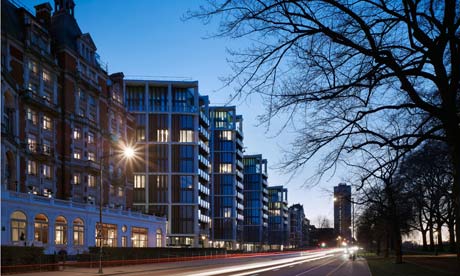
Canary Wharf Group controls development land for a further 9.8 million square feet (910,000 square meters) of property in and around the estate, including 3.3 million square feet of higher-value homes, Songbird said Nov. 28. 
More than 100,000 people work in the 35 office buildings and four shopping malls on the Canary Wharf estate, which is home to companies ranging from JPMorgan Chase & Co. to Gap Inc. The district is best known for the 50-story tower at One Canada Square, the U.K.’s tallest building until the Shard was completed in 2010.

Henry Cheng in London

Anbang bidding for Heron Tower for $1.16 bln

Shimao purchase of GS's Christchurch Court at Paternoster Square for £270m

The 303,000 sq ft office building at 15 Newgate Street, EC1 on Paternoster Square is let in its entirety to Goldman Sachs until 2025, subject to a tenant break option in 2020.      >> MORE

Taiwan-based Cathay Life purchase of Walbrook Building

2015 May 13   The prime Walbrook Building in City of London was acquired by Cathay Life for £ 575 million.


Taiwan's Fubon Life purchases Madame Tussaud

2015 May 26    Fubon Life is paying £332.5m for London tourist attraction Madame Tussauds.

The board of Secure Income REIT said it has exchanged contracts with the Taiwanese insurer to sell the asset in the third quarter of this year.
Secure Income said Fubon Life, which is being advised by Patrizia Immobilien’s UK office, is paying an 8% premium to the property’s December 2014 valuation of £309.3m.
The property is let to Merlin Attractions Operations, owner and operator of Madame Tussauds for at least the next 27 years, with the option for the tenant to extend by up to a further 70 years upon expiry.

Kepel Land purchase 75 King William Street


Keppel Land on Monday (Feb 9) has entered into a sales and purchase agreement with Aberdeen Property Trust for a freehold nine-storey office building in the City of London for £91 million (S$186 million), it announced in a press release.
The property, located at 75 King William Street, is said to be in close proximity to Bank Junction, London's historic and financial centre. Keppel said the investment will be managed by its fund management subsidiary, Alpha Investment Partners.
CEO of Keppel Land Ang Wee Gee said: "With continued growth in the financial services and new emerging industries such as the technology, media and telecommunications sectors, the London office market is expected to remain healthy.”
With a total internal area of 130,000 sq ft, the office building – completed in 1989 – is almost fully occupied by tenants in the financial services, shipping and serviced office industries, Keppel said.
“The above transaction is not expected to have any material impact on the net tangible asset per share or earnings per share of Keppel Land Group for the current financial year,” the developer added.   -- 2015 February 9   CHANNEL NEWS ASIA

Oz Buys into King's Cross Regeneration for £200 million


2015 February 13
2015 February 15


Malaysian buys in Hammersmith

Malaysian developer Eastern & Oriental has bought Landmark House and Thames Tower in Hammersmith, west London for £57m.
Eastern & Oriental Property (UK) has bought the 1.2-acre site in the heart of Hammersmith, which has the potential for a significant mixed-use redevelopment, from Dubai-based education provider Gems Education Board.
The UK subsidiary of Malaysian-listed Eastern & Oriental will now become the platform for a push into London property.
It now owns three property assets in London, including Princes House acquired in 2012, ESCA House acquired in 2014, and the latest Hammersmith project which together have a combined gross development value of £269m.
The site at Hammersmith Bridge Road is prominently located along the A4 which is the principal road connecting central London to Heathrow airport via the M4 motorway.
Currently, two existing and connected office buildings occupy the site: the 11-storey Thames Tower and 15-storey Landmark House, which were both constructed during the 1960s.
Allies & Morrison architects has drawn up a plans for a development of up to 22 storeys at the site, which it hopes will appeal to the upper end of the residential market as well as office occupiers.
The proposed scheme would provide a residential tower in the centre of the site as well as a terrace of houses on Angel Walk and an office building in the eastern area of the site.
Thames Tower is currently vacant, while vacant possession will be obtainable for Landmark House by the end of September 2015.
Dato’ Terry Tham, E&O group managing director, said: “This prime freehold parcel in the established commercial hub of Hammersmith represents a significant refurbishment or redevelopment opportunity for E&O in the future. Subject to the relevant authority approvals, there is the potential to create Grade A office space and residential accommodation in an area where demand for quality new build property is strong.”
Paul Nicholls, director at CBRE who acted for the vendor, said: “This transaction underwrites the growing interest we have seen from both domestic and international developers who want to capitalise on the wave of value spreading out from the core central London market.  Hammersmith is a strategic location with excellent transport links and has significant growth potential.”   -- 2015 January 19   PROPERTY WEEK


Retail

Stamp Duty


Telegraph Stamp Duty Calculator 


Asian investors

Asian investors, including insurers and banks, are buying into European properties as a way to diversify their portfolios as they seek steady yields of between 5 and 6 per cent.

Wanda faces challenges in its first project in London


    It is going to be a tough start for Dalian Wanda Group in Britain, industry experts say, as the mainland property-to-film conglomerate begins its first London project amid rising competition for clients and contractors, just as the tide in the city's prime home market appears to have begun to ebb.
    Wanda will market the One Nine Elms project in Hong Kong over the weekend, just a week after a Malaysian consortium started the sales process here for the iconic Battersea Power Station project.
    The two projects are about 1km from each other, both at the waterfront along the south bank of the River Thames, at the redevelopment zone of Nine Elms that comprises more than 20 different developments.
    Wanda's project is of a smaller scale, some 213 flats in the first release, and sits on existing infrastructure, said Michael Purefoy, a deputy general manager of Wanda's international real estate centre in Beijing.
    He told the South China Morning Post that clients' response from London, Singapore, Beijing and Shanghai had exceeded expectations, as global awareness of the Wanda brand grew amid the company's aggressive expansion in countries including the United States, Spain and Australia.
    Wanda bought the site last year in London near the new US embassy in its first foray into overseas markets. The 1.13 million sq ft scheme comprises two residential towers of 439 flats - one of which will be central London's tallest residential building - and a hotel. It is due for completion in late 2018.
    Foreign buyers have fuelled soaring home prices in London in the past few years. However, a survey by the Royal Institution of Chartered Surveyors showed expectations for housing inflation in the British capital were falling at the fastest pace since before the global financial crisis on worries about a strengthening pound, rising interest rates and possible punitive taxes on overseas buyers.
    Mark Farmer, head of residential at consultancy EC Harris in London, is more concerned about the delivery.
    "Wanda is bringing forward One Nine Elms in one of the most challenging London development markets of recent years," he said.
    "There are big contractor and supply chain capacity problems at the moment which are making the selection of construction partners very difficult."
    An EC Harris report in October estimated total prime residential units in the pipeline would hit 12,000 in the next three years with a peak in 2017, and planned completion would overshoot a deliverability ceiling of no more than 2,500 to 3,000 units per annum in the years between 2016 and 2019, considering both financing and human resources.
    London media said Wanda had appointed architects, project managers and cost consultants, but has yet to finalise the decision on its main contractor.
    Meanwhile, the 42-acre Battersea development has also yet to pin down the contractor for its third-phase construction, which will offer 539 apartments. It had fixed-price contracts for the first two phases. Delivery will start from mid-2016 until 2025.
    "The constructors are busy but there is still a lot of competition in the market," said Simon Murphy, chief financial officer of Battersea Power Station Development. "So we are comfortable that the numbers we have in our appraisal will be delivered in terms of cost, and we have funded the whole project."
    Murphy, a former HSBC banker, is betting on the history of the Battersea Power Station, which at its peak supplied a third of London's power but ceased operation in 1983, to attract Asian buyers against rivals. But he said developers including Wanda can help rebuild the old industrial Nine Elms neighbourhood.  - 2014 November 5,  SOUTH CHINA MORNING POST
    International Investors

    Japan’s Mitsui buys BBC west London site for £87m


    2015 June  Japanese developer Mitsui Fudosan and British partner Stanhope have agreed to buy the BBC’s studios in west London for £87m, the pair’s second deal with the publicly-funded British broadcasting group.   


    Queen of England in a Real Estate JV With Chinese Gov't to Buy Mall in UK


    You might think the Queen would want something a bit more posh than Fosse Park in Leicester.

    The Crown Estate, which manages the Queen of England’s real estate assets, announced late last week that it had joined with an investment-arm of the Chinese government to buy a shopping centre in the UK for £345.5 million ($576.76 million).

    The partnership between the Crown Estate and Gingko Tree Investment Ltd, a wholly owned unit of China’s State Administration of Foreign Exchange (SAFE), is the biggest acquisition ever for the Queen’s asset manager, and the latest in a string of deals in Europe for the UK-registered Chinese firm. The investment was revealed in an announcement from the Crown Estate.

    The deal for the 560,000 square foot (52,000 square metre) Fosse Park retail development in the city of Leicester shows the key role that government relations are playing in China’s outbound investment wave, as well as rising enthusiasm for recovering European real estate markets.

    The joint venture formed by the two companies purchased Fosse Park, which attracts more than eight million shoppers a year, from UK property firm Foyleside. Retailers represented at the centre appear to be distinctly mid-market, including Marks & Spencers, Gap, Clarks, Boots, DFS and Costa Coffee.

    China’s Government Investing Actively in Europe

    While Chinese real estate developers have gained headlines with plans for splashy projects in cities around the globe, the country’s state-owned asset managers have also played a significant role.


    Gingko Tree acquired One Angel Square in Manchester, England last year
    Gingko Tree was China’s most active buyer in Europe’s real estate markets in 2013, acquiring stakes in 16 properties worth a total of $2.44 billion in the London, Manchester and other locations. Gingko’s parent, SAFE, is the government office charged with managing the country’s foreign exchange reserves.

    China Investment Corporation (CIC), the country’s sovereign wealth fund has also been active in the UK market, and earlier this year acquired an office park in London from private equity firm Blackstone for £800 million ($1.34 billion).

    The Chinese government’s growing taste for overseas real estate investment comes as the country’s government asset managers move beyond their traditional strategy of parking the country’s assets in government bonds and other safe investments.

    The decision to move into global real estate markets is partly a search for yield, and is also likely to have been triggered by growing confidence and sophistication among the government asset managers tasked with the real estate investments, as well as among the bureaucrats supervising them.

    Private Investors Following the Government to the UK

    In China, there are few strategies as effective as working with the government, particularly for real estate deals. And the country’s property investors seem to be bringing this approach with them as they head overseas, so the tie-up between Gingko Tree and the Crown Estate is likely to drive still greater interest in UK property among Chinese investors. London has already been established as the favorite target among Chinese real estate investors.


    Wang Jianlin seems to be bringing his government alignment strategy with him on his trips overseas

    China’s richest man Wang Jianlin, who made much of his fortune through relationships with the Chinese government, has worked hard to develop ties with the authorities in the UK. Already last year Wang acquired a site in London to build a $1.1 billion hotel and residential project, and after meeting with British Prime Minister David Cameron in Davos earlier this year pledged to spend another $5 billion.

    England’s capital was the single biggest target for Chinese investors buying real estate internationally, bringing in nearly four times the amount of investment than closest competitor San Francisco, according to JLL. Even the total amount invested in San Francisco, Chicago, and Los Angeles combined did not equal half of that going into London. New York failed to finish among the top five investment destinations for Chinese capital during the period.


    Other China Related Purchases


    RESIDENTIAL


    Britain's 10 most expensive streets (average price) 

    1. Kensington Palace Gardens, London, W8, £42,591,972 
    2. The Boltons, London, SW10, £30,288,586 
    3. Grosvenor Crescent, London, SW1X, £22,752,425 
    4. Courtenay Avenue, London, N6, £19,609,231 
    5. Ilchester Place, London, W14, £13,718,746 
    6. Compton Avenue, London, N6, £12,049,363 
    7. Manresa Road, London, SW3, £11,600,920 
    8. Grosvenor Gardens, London, SW1W, £11,321,413 
    9. Cottesmore Gardens, London, W8, £11,037,133 
    10. Frognal Way, London, NW3, £10,702,421

    Rich and under 40

    Figures from Knight Frank show the proportion of properties worth £10m or more sold to thirtysomethings rose from 7.1% to 14.8% between June 2014 and June 2015. Accompanying comment singles out tech and IT money as the source.

    Tax


    JLL 2016 Q1


    Look How Many Towers Are Being Planned


    Tuesday, May 21, 2013

    London


    Investors Play Monopoly Betting on London Real Estate


    London Essentials


    London Still A Draw for Asian Investors

    HK$1.6b deal to buy Marriott London Grosvenor Square Hotel

    The prospect of high returns and a British tourism boom prompted Chow Tai Fook Group and some partners to snap up a luxury hotel in central London for £125.15 million (HK$1.6 billion).  -- SCMP  2014 Apr 3

    Chow Tai Fook Group purchased the 237-room Marriott London Grosvenor Square Hotel in central London for $207.92 million.

    The deal works out to $877,000 for each room, making it the second-most expensive hotel deal in London this year in terms of price per room.

    The private equity fund - formerly known as Polylinks International and formed by a group of wealthy Hong Kong, Singapore and Malaysian businessmen - has invested in the global property market.

    The fund has seven partners: Chow Tai Fook Group, the Wee family of Singapore's United Overseas Bank, Lee Seng Huang of Malaysian-listed Mulpha International, Tom Chan from the founding family of Crocodile Garments, Arthur Liang from the family who were once major shareholders of The Hongkong and Shanghai Hotels, David Chiu of Far East Consortium International and New World Strategic Investment.

    But only four of the partners - Chow Tai Fook, Mulpha, Chan and Liang - were involved in the acquisition of the 237-room Marriott London Grosvenor Square Hotel last month.

    "It is our unique business model and the key to our success. Our members can choose to be involved in different property purchases, depending on their preferences,"   --  2014 May 13  SCMP


    Significant Asian Real Estate Transactions in London include:

    GIC purchaser of Broadgate Stake


    GIC Pte, the Singapore sovereign wealth fund, is the buyer of Blackstone Group LP's stake in London's Broadgate office complex, according to two people with knowledge of the deal.


    GIC has bought he entire 50 per cent stake in London's Broadgate commercial estate from property giant Blackstone.
    The other 50 per cent stake in Broadgate, which comprises 17 office buildings spanning 4.7 million square feet on 12 hectares, will continue to be held by British Land.
    Blackstone bought its 50 per cent stake in 2009 from British Land, in a deal that valued the estate at about £2.1 billion.
    The consideration for GIC's purchase was not disclosed, but previous media reports had pegged it at around £1.7 billion (S$3.5 billion) - believed to be a record for a central London property
    The purchase is the latest trophy acquisition for GIC, formerly known as Government of Singapore Investment Corp. The fund last year invested in 101 California St, an office tower in San Francisco's financial district, and in March acquired the Grand Wailea in Maui and four other resorts from a group including Paulson & Co for US$1.5 billion.  -- 2013 December 24

    CIC Purchaser of Chiswick Park Office Project


    China Investment Corporation (CIC) is set to buy Chiswick Park, a west-London office development, from US private equity group Blackstone for about £800 million (S$1.6 billion), the Financial Times reported, citing people familiar with the matter.
    The talks are at an advanced stage and a deal could be finalised before end of November, the FT said. If successful, the deal would be the second acquisition by CIC in the UK property market after it bought Deutsche Bank's City of London headquarters last year, the newspaper added.
    Real estate has been the chief driver of Blackstone's financial success and it has moved aggressively to sell or take public its real estate assets.
    Brixmor Property Group Inc, the shopping centre operator owned by Blackstone, raised US$825 million in its initial public offering last month.

    Historical:  Upswing in London


    Prices of central London commercial property have soared, and now surpass their pre- crisis level


    CHANGE SINCE DEC. 2002
    Quarterly index of prices, through
    Q1 2014
    +100
    %
    Central London commercial
    property
    + 75
    + 50
    + 25
    0
    − 25
    British commercial
    property, excluding London
    − 50
    ’03
    ’05
    ’07
    ’09
    ’11
    ’13
    Source: Real Capital Analytics

    Canary Wharf : History

    PUBLISHED JUNE 24, 2014
    Canary Wharf skyscraper sold for £795m
    [LONDON] Canary Wharf Group has sold a one million square foot building in London's financial district to a Chinese-Qatari consortium for £795 million (S$1.69 billion), the group's owner said on Friday.
    Qatar has built a significant presence in London's real estate market in recent years.
    Under the deal to buy the skyscraper which houses law firm Clifford Chance, China Life Insurance Company will own 70 per cent of the building and Qatar Holding a 20 per cent stake. Songbird Estates, Canary Wharf Group's owner, said that it would retain a 10 per cent interest in the property.
    The purchase was financed through equity provided by the stakeholders proportionate to their stakes, as well as through bank loans, Songbird Estates said in a statement.


    HSBC HQ back on the Market

    When the global bank HSBC sold its London headquarters tower to a Spanish buyer in spring 2007, at the height of the credit and property boom, the deal was the single largest real estate transaction in British history.
    Then the boom went bust, prompting a fire-sale handover of the building back to HSBC. Next came the nadir. A new owner, this time from South Korea, bought the tower in hopes of a rebound.
    Now the 44-story building, still serving as HSBC’s headquarters, is for sale yet again.
    Because the market is teeming with international money, some analysts predict the price this time will surpass that 2007 record of 1.1 billion pounds, or $1.8 billion — a forecast that might say everything you need to know about the boom-bust-boom of London commercial real estate.
    Except that there is actually much more of a story to tell about the HSBC tower. As goes this building, so goes the London market.
    “It traded right at the top, and then again at the bottom and now it’s right back up at the top,” said Simon Mallinson, managing director of Real Capital Analytics, a company that tracks global real estate transactions. “The tower is reflective of where the city is.”


    The HSBC tower in Canary Wharf, now owned by a South Korean pension fund, is again up for sale.
    Credit
    Tom Jamieson for The New York Times

    Prices for London office buildings, not adjusted for inflation, have surpassed their previous high point reached in 2007 by 10 percent, according to Real Capital.
    Last year, £19 billion worth of commercial real estate was sold, compared with the previous record of £17.9 billion in 2007, according to another firm, CBRE Global Research and Consulting.
    “2013 was a storming year, the best year we have ever had,” said Neil Blake, a CBRE executive.
    In recent months, the American investment company Blackstone, which scooped up London property during the depths of the crisis, has sold its stakes in two major building groups, posting giant profits on each. In a separate deal, St. Martins, the property division of the Kuwait Investment Authority, paid £1.7 billion — in cash — for another group of London buildings.
    Residential real estate in London and southeast England generally, propelled by foreign money, is also on a tear, with prices running at an annual growth rate of 17 percent — which has politicians and central bankers wondering how to subdue the frenzy.
    For international investors in commercial real estate, London has some important advantages over the United States. Sales proceeds on buildings do not incur capital gains taxes, and leases are much more favorable to owners than to renters.
    The standard London lease terms, in real estate lingo, are “full repair, insure, upwards only with five-year review.” In other words, the tenant is responsible for any repairs, must insure the building and understands that typically the rent can only rise, not fall, after five years.
    But as commercial real estate soars once again, banking is not driving the market as it did in the previous London cycle.
    “The banks have been very much reduced in terms of occupancy needs, and what we see is the growth of other sectors,” said Peter Bennett, city surveyor for the City of London.


    VICTORIA
    PARK
    Google
    campus site
    REGENT’S
    PARK
    KING’S
    CROSS
    Gherkin
    WESTMINSTER
    LONDON
    EYE
    CANARY
    WHARF
    Cheesegrater
    CITY OF
    LONDON
    HYDE
    PARK
    HSBC
    headquarters
    TOWER OF
    LONDON
    HOUSES OF
    PARLIAMENT
    BUCKINGHAM PALACE
    KENSINGTON
    AND CHELSEA
    SOUTHWARK
    Thames River
    BATTERSEA
    PARK
    1 MILE

    Driving this boom are business services and technology companies that are setting up or expanding their London bases. There is also considerable outside money, seeking the perceived security of hard assets in the British capital — whether pension funds from Norway, Canada and elsewhere or sovereign wealth funds from Asia and the Middle East.
    Worldwide, sovereign wealth funds increased their direct investments in real estate to $21.6 billion last year, from $2.8 billion in 2010, according to Institutional Investor’s Sovereign Wealth Center. Britain received $9.4 billion of last year’s total — double the amount of the runner-up, the United States.
    The money, Mr. Bennett said, used to come in national waves: the Americans, the Germans, the Japanese. “Now,” he said, “we have a tsunami of investors from all of the world all at the same time.”
    As a result, the City of London, which generally refers to the square mile built by the Romans nearly 2,000 years ago, and which for centuries has been a center of banking and commerce, is now festooned with construction cranes.
    New buildings, many with quirky, descriptive nicknames, have sprung up in the City in the last decade and others are still under construction. One of the newest is 122 Leadenhall Street, better known as the Cheesegrater for the distinctive wedge shape the architect, Richard Rogers, designed to avoid blocking the view of St. Paul’s Cathedral for neighboring buildings.
    London’s other business “city,” where the HSBC tower sits, is Canary Wharf, the skyscraper park three and a half miles east of the more pedigreed City. It, too, is a magnet for foreign money.
    Development of Canary Wharf, built on the site of former cargo docks, was begun in the late 1980s by a Canadian company, Olympia & York, which had the bad timing to be caught by one of London’s periodic real estate busts. Yet even though the initial development project went bankrupt in 1992, the next economic rebound, particularly in the financial industry, rekindled demand for office space.
    HSBC was among the banking giants drawn to Canary Wharf for its modern, open space, which contrasted with the higgledy-piggledy layout of the centuries-old City.
    HSBC commissioned Norman Foster to design its headquarters tower, on which it spent £500 million, and took up residence in 2002. Although architecturally nondescript compared with some of the nicknamed City icons, the tower is one of the largest single headquarters buildings in
    Europe, with 1.1 million square feet.
    But five years after HSBC moved in, with the credit-fueled finance industry at a fever pitch and commercial real estate starting to look very much like a bubble, bankers close to the company say HSBC decided it was “not in the property business.”

    The bank decided to conduct a sale-leaseback, selling the building but taking out a lease as the tower’s main occupant — a setup that can be alluring to buyers, if the tenant is a reliable one.

    In May 2007, HSBC found a ready buyer in an affiliate of Metrovacesa, a Spanish conglomerate with a big appetite for real estate even as some of the smarter money was growing wary.
    The record £1.1 billion transaction involved HSBC’s leasing the building while also providing Metrovacesa with an £810 million loan to finance the purchase. When the debt-fueled real estate market began its tailspin a short time later, in a local version of the global vortex, Metrovacesa could not syndicate the loan.
    By late 2008, with banks paralyzed and developers scrambling to clean up their own portfolios, the best prospective buyer looked to be the building’s anchor tenant and the Spanish company’s creditor, HSBC.
    Negotiations went right up to midnight on a Tuesday in early December, a deadline the bank had set after Metrovacesa was unable to make a crucial loan payment. Having the upper hand, HSBC canceled the loan and took the building back, making £250 million.
    But HSBC, under as much pressure as most other big banks during the depths of the financial crisis, was no more eager than it had been in 2007 to be in the real estate business. In late 2009, South Korea’s National Pension Service took the building off HSBC’s hands for even less than the bank had paid a year earlier: £773 million.
    Nearly five years later, with London real estate red hot once more, the South Korean pension fund is eager to diversify its assets and realize some profits.
    The tower could be alluring to a new owner because that same anchor tenant, HSBC, has 13 years remaining on its lease, and the rent will increase every year by 2.5 to 6 percent, depending on where the retail price index falls.
    “The lease is completely unique and the building is attracting interest from billionaires, national pension funds and sovereign wealth funds,” said Andrew Hawkins, a director at JLL, one of the two brokers working on the sale.
    Still, some analysts are skeptical that the price will break the £1.1 billion mark set in 2007, noting that Canary Wharf is well east of central London.
    For all that, though, Mr. Blake of CBRE Global Research does not see a top yet to the current market.
    “We are not at the end here,” he said. “We are only at the beginning.”
    That could mean the HSBC tower, the litmus test of London real estate, might change hands yet again. At a price that will be a sign of the times


    China firm buys Tallest Residential Tower in Europe

    China state-backed Greenland Group has snapped up the stalled site of Europe's tallest residential tower, in London's Canary Wharf financial district, after an earlier deal with an Irish group fell through.

    Greenland confirmed on March 12, 2014 that it exchanged contracts with Commercial Estates Group to buy the Hertsmere site for ~£ 600 million.  

    The site has permission to build a 242-meter tall building containing 700 residential, offices and shops. 

    Hong Kong Monetary Authority set to play London Real 

    Estate

    • London Metal Exchange purchased by Hong Kong Exchange & Clearing - Telegraph version

    The Hong Kong Monetary Authority is set to foray into property development for the first time and splurge at least 202 million (HK$2.52 billion) on a project in central London.

    The territory's de facto central bank, headed by chief executive Norman Chan Tak-Lam, has set up a 50-50 joint venture with UK-based Great Portland Estates to build a commercial-cum- residential project in Mayfair, hoping to boost returns of the Exchange Fund. The fund is used to back the Hong Kong dollar.

    Great Portland has injected the Hanover Square Estate to the joint- venture company, GHS Limited Partnership. It expects the project to start in 2016 and finish by 2018. The site cost 202 million but the total investment is yet to be disclosed. It is part of the Bond Street Crossrail station redevelopment scheme that combines Grade A offices, retail space and residential units.

    Hanover Square Estate has a gross area of 208,000 square feet. Fully 78 percent of the area will be used to build three Grade-A offices above the station. About 16 percent will be devoted to retail and restaurant use while the remaining 6 percent is to contain residential units.

    An authority spokeswoman confirmed the deal and stressed "properties in the West End in particular have had a positive growth trajectory underpinned by very limited supply." The partnership will create long-term value, which is in line with the HKMA's real estate investment objective, it said.

    The Exchange Fund invested HK$13.5 billion on real estate last year generating 10 percent annual yield - higher than other asset classes. Total assets of the fund amounted to HK$2.78 trillion as at the end of 2012.

    The fund's real estate investment portfolio also includes properties in major cities including London, New York and Paris.

    Economist Andy Kwan Cheuk-chiu said he doubts if property prices in London are reasonable at the moment but is encouraged to see the government allocate more to riskier assets because bonds have not performed well. He also expects real-estate prices in London to remain resilient.

    But according to the latest report by Colliers International on central London offices, rental yields of Grade-A offices in Mayfair only reached 4 percent during the third quarter while the vacancy rate stood at 16 percent. But rents on average stood at 120 per square foot per annum - the highest in the West End. In Hong Kong, the highest Grade-A office rent is HK$160 per square foot per month.

    Great Portland Estates said the HKMA was among 10 investors who showed interest, and it won the contract due to its active response. In 2011, the HKMA spent HK$3.31 billion on 10 Aldermanbury Square in the City of London.

    Other sovereign wealth funds and large Asian state-owned corporations such as China Investment Corp, Nippon Telegraph and Telephone Corp and South Korea's National Pension Service have also invested in London's commercial property market.

    The South Korean fund acquired the prestigious HSBC building in Canary Wharf for US$772.5 million in 2011.

    http://www.thestandard.com.hk/news_detail.asp?we_cat=11&art_id=139370&sid=40834354&con_type=3&d_str=20131108&fc=8


    Singapore's Oxley Holdings Purchase East London Site for S$396 million 

    Singaporean developer Oxley Holdings shelled out 200 million pounds (S$396 million), for a site with plans to build more than 4,000 homes on the 37-acre plot of land.
    PUBLISHED NOVEMBER 15, 2013

    Foreign embassies abandoning elite London addresses

    [LONDON] Foreign embassies are abandoning London's premier addresses such as Mayfair and Kensington as the world of diplomacy changes in the face of security risks and new technology, just as property prices are reaching untold heights.

    The trend to move further afield to more secure, functional properties is being led by the US, which on Wednesday marked out its future in a new site south of the River Thames.
    Estate agent Wetherell and the Diplomat magazine found at least 20 of the 165 diplomatic missions in London have been sold or explored a sale in the past six months after prices in up-market embassy areas rose by up to 60 per cent since 2007. But the exit from palatial houses in ritzy areas was also seen as reflecting the changing nature of diplomacy, with extravagant displays of nationalism deemed inappropriate in a tough economy and greater security needed.

    "Embassies took over grand houses at a time when diplomacy was serving drinks and eyeball-to-eyeball contact which was the way of doing business then," Peter Wetherell, managing director of Wetherell, told Reuters. "Things have changed and nowadays these buildings are not really fit for purpose."

    Flats Expected on Grosvenor Square

            The stamp duty bill alone for the sale will come to £1,260,000 


    Exclusivity


    Kensington & Chelsea


    Residences


    Nearly a year and a half after it hit the market for a whopping $160 million, London's One Cornwall Terrace has sold to British property tycoon Marcus Cooper, according to The Sun.

    He reportedly paid $120 million for the home, significantly less than its asking price. Even with the discount, it's a record price for a terraced home, The Sun reports.

    The 21,500-square-foot mansion, near Regent's Park, is named after King George IV, who was originally the Duke Of Cornwall. It has seven bedrooms, nine bathrooms, and 11 reception rooms.

    It was the official London residence of the New Zealand High Commissioner from 1955 until the 1970s, and was later occupied by squatters, according to The Sun.

    But it later went a full restoration, and now includes a sports complex with an indoor swimming pool, iPad-controlled lighting, and a 40-meter landscaped garden.

    Cooper, founder of Marcus Cooper Group, is a property developer in London whose portfolio includes residential and commercial properties throughout the city

    http://www.businessinsider.com/londons-one-cornwall-terrace-sells-2013-3#ixzz2eRnOhJBO

    Foreign Property Investors

    London’s status as a magnet for foreign property investment was burnished in the years after the financial crisis by an investor-friendly tax regime and the falling value of the pound


      Voracious investor demand for the best real estate in London

      • The luxury shopping strip that is home to Prada, Louis Vuitton and Gucci provide low yields - just 2.75% presently on Bond Street.
      • The current yield on Bond Street property is below the 10-year average of 3.7% and 5% yields on the best office blocks in London's financial distric and central Paris respectively.
      • Office conversion to resi?
      • Oxford purchase of Royal Exchange

       SEPTEMBER 06, 2013

      London's Mayfair rents set to soar

      Rising demand for art spurs auction houses and galleries to open


      Rental Rates on Bond St. have increased 40%
      Rents in upmarket London district Mayfair are set to soar as galleries and auction houses line up to open in the neighbourhood amid rising demand for art, the London Luxury Quarter business group said in a report yesterday.

      Rental rates on shopping avenue Bond Street have increased 40 per cent in the last 18 months, the group said. That's more than any other London area, according to real estate company Jones Lang LaSalle Inc.


      The introduction of London train route Crossrail will increase the number of passengers alighting on the street by 30 per cent in 2018 and propel rates further, the report said, citing property agents Knight Frank LLP.

      New York-based art dealer Larry Gagosian is set to open his third London gallery at Mayfair's 20 Grosvenor Hill while commercial property owner The Pollen Estate is planning five new art spaces on Cork Street, the group said.  

      PUBLISHED MARCH 11, 2014

      Wanted: China tenants for UK business district


      [LONDON] The developer of a huge business district in northern England is planning a roadshow through cities such as Beijing and Shanghai to attract Chinese tenants to Manchester. China's Beijing Construction Engineering Group (BCEG) says that the project is the biggest in Britain since the 2012 Olympics and believes it could help move the centre of economic gravity away from London.

      Last October, BCEG announced that it would become a 20 per cent partner alongside construction group Carillion and the Greater Manchester Pension Fund to develop an £800 million (S$1.7 billion), five million square foot business district at Manchester airport, Britain's third busiest.

      Its choice of Manchester marks a departure from the path taken so far by most Chinese property developers, such as Advanced Business Park, that have headed first to the capital, where demand for space has stayed strong through the downturn compared to the rest of the country.

      "The project itself by size is the biggest development project since the London Olympics . . . I think the way people do business in the UK, particularly in the north-west, will be changed because of this project," Xing Yan, BCEG International managing director, told Reuters.

      PUBLISHED OCTOBER 10, 2013

      Foreigners buy half of London's best homes


      [LONDON] People living outside the UK have accounted for about half of all new home purchases in London's best neighbourhoods as affluent investors sought a safe haven from turmoil in the Middle East and Europe's debt crisis.

      Foreign-born buyers, including those living in the UK, made 69 per cent of new-home purchases in London's prime areas in the two years through June, while those living abroad bought 49 per cent of the homes, Knight Frank said in a report on Tuesday. About 28 per cent of those who bought central London homes worth £1 million (S$1.9 million) or more in the year through June don't live in the UK, the broker said.

      "The majority of demand for new-build property in London from overseas remains focused on the relatively small and concentrated market made up of the central London postcodes," Liam Bailey, London-based Knight Frank's global head of residential research, said.

      Overseas investors are buying London real estate to preserve wealth as political and economic tension roils their home markets. Savills and Knight Frank forecast in July that luxury home values in districts such as Mayfair, Belgravia and Knightsbridge would rise 6 per cent this year. Most of the buyers are from Europe, the Middle East and Russia, Knight Frank said. British residents bought 85 to 90 per cent of new homes sold in greater London in the two years through June, it said. - Bloomberg

      Asians play Monopoly in London

      International buyers now account for 65 per cent of new-build sales across prime London, rising to 70 per cent in prime central locations and 78 per cent for new build properties over £5 million (S$9.8 million).   -- 2012  October 18 BUSINESS TIMES

      Rich students move into luxury UK digs

      They are snapping up flats that bankers used to occupy
      10 Jul 2012 09:40
      Bt_20120710_students10_1320640e_top_story_fullPrime areas: Students are renting in exclusive districts - BLOOMBERG
      [LONDON] Floor-to-ceiling windows, chairs by French designer Philippe Starck, four-poster beds and a short walk from the Louis Vuitton store on London's Bond Street.
      These are no ordinary student digs.
      Apartments for rent in London's most exclusive neighbourhoods have traditionally been the preserve of bankers.
      As the potency of the financial sector wanes, they are increasingly let to children of the international super-rich studying at the city's universities.
      "I chose the place and then asked my parents whether it was alright," said Sumiro, a 21-year-old Indonesian student who will be living alone in the £895 a week (S$1,763) two-bedroom apartment with the Philippe Starck chairs when he starts university in September.
      Another attraction were his numerous friends living nearby, he said.
      Unlike the stereotypical British students who squeeze into cramped flats and shop in budget stores, the offspring of the super- rich exhibit a taste for luxury furnishings, in-house gyms and cleaners that visit twice a week.
      "They're looking for a hotel room," said Naomi Heaton, chief executive of residential fund manager London Central Portfolio (LCP), which has students from Russia, China and Saudi Arabia renting homes in an overall property portfolio worth £500 million. "Many of them would have experienced a fairly sophisticated lifestyle, travelling around the world business class. Their requirements are similar to that of corporate tenants."
      Nadine, the daughter of a Lebanese businessman, laid out her accommodation requirements.
      "We didn't want a typical British student pad, we wanted something quite big, quite decent, so that there would be space for our parents and friends when they visited," said Nadine, who lived in a £2,400 a month London flat while studying last year.
      The rise of the wealthy foreign student comes as companies in the financial sector cut jobs and budgets, under pressure from shareholders and politicians.
      At the same time, strong economic growth in China and other parts of Asia has created immense wealth, mainly fuelled by manufacturing, construction and commodities. The number of US dollar millionaires in Asia outnumbered North America for the first time in 2011.
      It has led to a surge in demand from overseas buyers of the best London homes, seen by many as a sound investment.
      Prices for the most sought after central London properties have risen about 44 per cent in the last three years, more than twice the increase across the capital as a whole, Knight Frank data shows.
      "The wealth underpinning the student market is stronger than the wealth underpinning the corporate tenant market," Ms Heaton said.
      Paris and New York are also popular student destinations. In February, Russian fertiliser oligarch Dmitry Rybolovlev paid US$88 million for New York's most expensive apartment, a penthouse the size of two-and-a-half tennis courts with views of Central Park, for his student daughter.
      The previous owner was a banker - former Citigroup CEO Sandy Weill.
      Parents keen to get the best located homes for their children are often prepared to outbid bankers, Ms Heaton said. They also sometimes pay a year's rent upfront as their children do not have a UK credit history.
      LCP research showed that the proportion of homes in prime neighbourhoods such as Mayfair and Knightsbridge rented by international students doubled to 23 per cent in the six years to June 2012, becoming the second largest group behind the financial sector at 45 per cent.
      "With the current rates of growth, international students would represent 50 per cent by 2020," LCP's head of investment Management, Hugh Best, told Reuters, saying that expansion in the financial sector was likely to plateau.
      Job cuts among bankers caused prime London rents to fall for the first time in two years, property consultant Savills said on June 22.
      Foreign students in the City of Westminster district, which includes some of the city's priciest streets, pay an average annual rent of £28,878, LCP said. By contrast, the average UK student paid £3,490 in 2011, data on UK website Accommodation for Students said.
      About 26 per cent of London's students are from overseas, with China, India and Nigeria sending the most students to the UK between 2009 and 2011, data from the UK Council for International Student Affairs showed.
      Bankers squeezed by cut budgets were eyeing moves to cheaper housing in less central London neighbourhoods such as Fulham or Bayswater, said Matthew Hobbs, who heads the lettings team at Savills's Kensington office.
      "Instead of spending £1,000 a week, they're spending £800 a week. They're scaling back. You can rent a nice house in Islington for 80 per cent of what you can rent a nice house in Kensington for." - Reuters   Published by Singapore Business Times

      New UK Tax on Foreign Home Buyers

      A hefty captial gains tax of up to 28% on any future flippings of homes in the U.K. begins in April 2015.

      More than £7-billion ($12.2 billion) of real estate in London was sold to international players in 2012.   

      Data

      Hotels

      Localization:  Creative Value-Adding


      Globe & Mail


      PUBLISHED DECEMBER 06, 2013

      London votes for foreign property-investor tax

      [LONDON] The London Assembly passed a motion welcoming a possible move by the government to bring in capital-gains tax on foreign investors selling a home in the city.
      The motion was passed on Wednesday with 13 votes in favour and six against, according to an e-mailed statement by the 25-member assembly, whose main function is to hold London's mayor to account.

      "Londoners' right to own a decent home must be put before speculative investors in London's property market," assembly member Tom Copley from the Labour Party, in opposition nationally, said in the statement. "London property is becoming a global reserve currency for people to keep their money and to make money out of London property."
      Prices for luxury homes have soared in recent years as the debt crisis in the euro region and uprisings across North Africa have made London property a haven for international investors. The government's Help to Buy programme has also fuelled concerns about a potential bubble.